

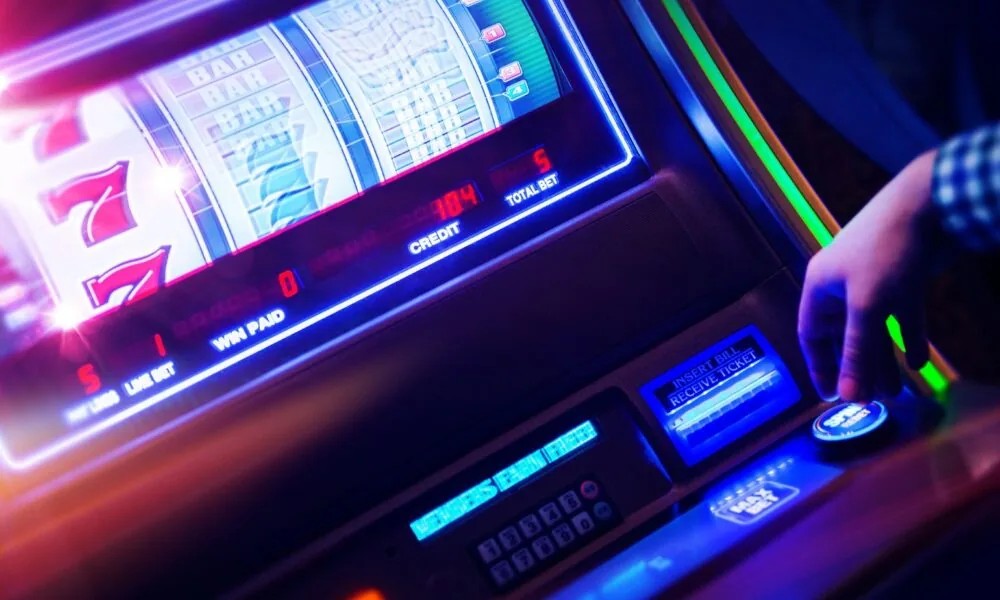
Why is reel syncing important?
Reel syncing refers to a mechanical feature where two or more reel sets within an online slot produce identical or coordinated symbol outcomes across a shared spin event. Rather than each reel set spinning and resolving independently, synced reels arrive at matching configurations simultaneously. This is governed by a shared trigger condition built into the game’s construction. This does not happen by chance. When reel syncing occurs, it is because the SQUEENVIP slot casino game has been built to produce that outcome under specific conditions. This is usually tied to a bonus trigger, a special symbol landing, or a defined phase within a session.
The concept becomes more layered when applied to linked slot games, where multiple game instances share a network connection and, in some constructions, interact during certain mechanical events. In these environments, reel syncing takes on a different character. It is no longer confined to multiple reel sets within one game screen. It becomes a question of whether the link between separate game instances extends to coordinating reel outcomes across them. It also becomes a question of under what mechanical conditions coordination is possible.
How do linked games sync?
Linked slot games share a network to pool contributions toward a common jackpot mechanism. Each instance feeds into that shared pool independently, and the jackpot trigger resolves across the network when conditions are met. That shared infrastructure does not automatically sync reels between instances. The connection governs jackpot behaviour, not individual reel outcomes on each machine.
Some linked constructions do incorporate synchronised visual or mechanical events that affect all connected instances at once. A network-wide bonus trigger, for example, may prompt all linked instances to enter a shared bonus phase simultaneously. Within that phase, reel behaviour across instances may follow a coordinated pattern rather than producing entirely independent outcomes. Whether that coordination qualifies as true reel syncing depends on how the specific game handles the shared event mechanically.
Syncing within single games
Stacked wild events on adjacent reels are a good example of this. When the game designates two or more reels to carry matching stacked wilds during the same spin, the result mirrors what reel syncing produces in a more formal construction. Locked reel mechanics work similarly. The game selects a set of reels before the spin and holds them to identical symbol configurations, effectively syncing their output for that round.
Bonus phases extend this further. Free spin rounds built around synced reel sets apply the coordination consistently across every spin in the sequence rather than triggering it conditionally. The synced reels produce matching columns on each spin throughout the bonus. This affects how winning combinations form across the grid for the duration of that phase.
Outcomes from synced reels
Reel syncing changes the combinatorial landscape of a spin in ways that standard independent reel behaviour does not. When two reels carry identical symbol configurations, the probability of specific combinations forming across those positions shifts. Matching high-value symbols on synced reels increases the likelihood of premium combinations landing. This is precisely why the mechanic is placed within bonus phases or tied to high-impact trigger events rather than running continuously through base gameplay.
In linked game environments where a shared event coordinates reel behaviour across instances, all connected players experience the same shift in combinatorial conditions during that event. The synced phase applies uniformly across the network, meaning the mechanical advantage of the sync is not isolated to a single player. Once the shared event concludes, each instance returns to independent reel resolution. The network connection reverts to its primary function of maintaining the joint jackpot pool. Single-instance games and linked games are capable of reel syncing, with the frequency and scope determined entirely by the way the games have been built.
