

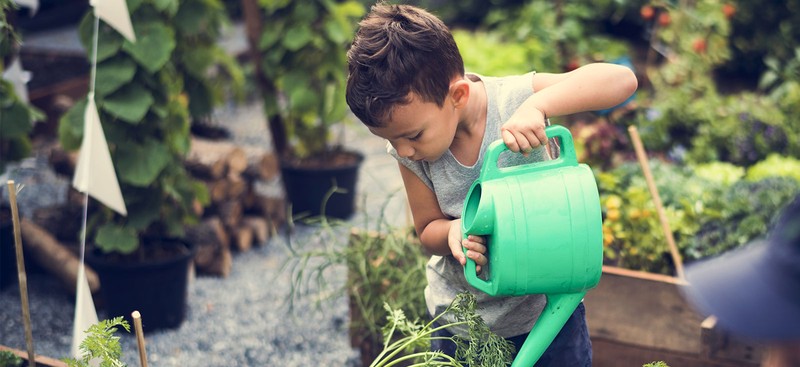
Gardening is an excellent activity for children because it promotes physical activity, teaches them about the environment, and teaches them to appreciate fresh, nutritious food. It is common knowledge that exposing children to nature, even in the most basic form, is beneficial, but did you know that gardening activities can also have a profound effect on children? Gardening is an excellent learning opportunity for children because it teaches them lifelong practical skills. The following are some of the most significant advantages that children gain from working in a garden together.
Engage the Senses:
Gardening is an excellent way for children to develop their senses. Touching the soil, flowers, fruit, leaves, and seeds; seeing the variety of plant sizes and colors; hearing the rustling of leaves and the crunch of harvested fruits and vegetables; and smelling the freshness of herbs and flowers can all provide visitors with an authentic experience of the garden. The fact that they can take pride in their accomplishments is the icing on the cake. Utilizing all five senses while gardening can help children gain a deeper understanding of the activity and where their food comes from.
Sense of Responsibility
Growing and caring for one’s own garden is an excellent way to teach children the value of exertion and responsibility. They will soon realize the importance of daily care for their seeds and seedlings. A daily checklist will help children remember everything they must do to care for the plants. Early on, they will have recognized the necessity of environmental conservation education. There will be presentations regarding invasive species, chemical use, pollution, and reuse.
Motor Skills
Gardening is an excellent way for children to develop their fine motor skills. Developing a child’s motor skills through gardening activities such as planting seeds, digging, and watering may improve the child’s focus and academic performance. In a garden, children can develop their five senses, from sight and sound to touch and smell. The interaction with the natural environment facilitates experiential learning. Children can exercise their arms and hands by digging, planting, watering, and pulling weeds. These activities aid in the development of children’s motor skills and give them direct experience with the contrasts between large and small, smooth and rough, hot and cold, and dry and moist.
Encourage a Balanced Diet
Sometimes it can be difficult to get children to consume their fruits and vegetables. Involving children in every step of the process increases the likelihood that they will take pride in their accomplishments and maintain healthy eating habits. Children are more likely to try new foods if they are involved in their production from seed planting to harvesting. They cannot wait to sample the results of their culinary efforts. It is crucial to instill in children a lifetime appreciation for healthy eating and physical activity. Your children may be inspired to follow in the footsteps of chefs such as Gordon Ramsey and Jamie Oliver, who advocate the use of fresh, locally grown ingredients.Read more about the Best Celebrity Chefs and their restaurants over at Slingo.com
Get them interested in STEM
Numerous facets of gardening offer excellent opportunities for teaching young people fundamentals in fields such as physics and mathematics. The counting of seeds, the measurement of soil depth, and the measurement of leaves and petals are examples of mathematical concepts with potential applications in the garden. In the classroom, sprouting is an excellent way to demonstrate photosynthesis and the relationship between water and sunlight that is essential for plant growth. In addition to producing aesthetically pleasing results, gardening is an excellent way to teach children the value of patience. The anticipation you feel prior to the blooming of a flower or the harvesting of a crop will intensify.
Through their play, kids learn about the world around them.
As soon as they plant the first seed, they will be overcome with awe as they observe their plants grow, bloom, and bear fruit. Their numerous inquiries will assist them in learning important environmental lessons. Understanding the significance of insects and worms enables children to appreciate the interconnectedness of the natural world. Playing games with children, counting flower petals, and comparing the growth of various plants are enjoyable pastimes. The model of learning through play has been adopted by numerous schools. Such as Waldorf and Montessori schools. Where teaching children of all ages how to garden is prioritized due to the numerous mental and physical health benefits it may offer.
It’s fantastic for young children and families.
Helping out in the garden could become an annual family tradition. Families rarely spend time together these days, but preparing dinner together can be a fun way for parents and children to bond. Gardening can improve the psychological, physiological, and existential health of both adults and children.
It improves communication and interaction skills.
In educational settings, gardening as a group activity has the potential to be a highly effective means of expanding one’s social circle. Children can have fun while learning the value of teamwork and exchanging stories about the various types of flowers they’ve grown and how they began as seeds. If children have a stake in who will see their blossom emerge first, it will encourage them to interact with others and participate in group activities. The relationships between children can blossom like the flowers they cultivate in a garden. The availability of a small garden could aid in teaching children about gardening and plant care. This can be utilized alongside the School Planter, which is ideal for caring for newly transplanted seedlings. The wooden outdoor sandbox can also serve as a planter. The four separate areas are ideal for cultivating multiple types of seeds simultaneously. It is ideal for daycares, preschools, and elementary schools because it allows children to complete group activities in smaller groups. This sandbox’s durable construction makes it suitable for years of outdoor use by a large number of children. The sensory stimulation you receive in a garden also contributes to your physical development. If your child dislikes all other aspects of gardening, playing with the hose or watering the plants could be a highlight. It is fascinating to smell the fresh garden and its plants and to feel the soil or the leaves. Frequently, a garden is a kaleidoscope of hues and tones. Growing food is one of the few activities where a child’s sense of taste can be utilized without risk. When children participate in harvesting, they are more likely to try the food they helped produce. Reading and writing are skills that can be applied to gardening. One form of literacy is reading the labels on seed or plant packets to become familiar with the names of various plants and the optimal growth conditions they require. Creating a map of your garden or yard and classifying the plants within it is an additional reading and writing exercise you can complete. When your seeds begin to sprout and you cannot distinguish between weeds and the fruits, vegetables, and flowers you sowed, a map of the region may be of great assistance. Memory, analysis, and the capacity to anticipate future events are all components of cognitive development. This type of activity is abundant in gardens, making them ideal for family time. Help them understand the steps of soil preparation, planting, watering, and weeding by asking them open-ended questions about what they have done in the garden thus far and what they believe you should do next. Ask them to explain the differences between the plants you’re cultivating and the various plant parts. Present the plant as a whole, including its roots, stem, leaves, flowers, and seeds, or have students draw the plant at different stages of development.
