
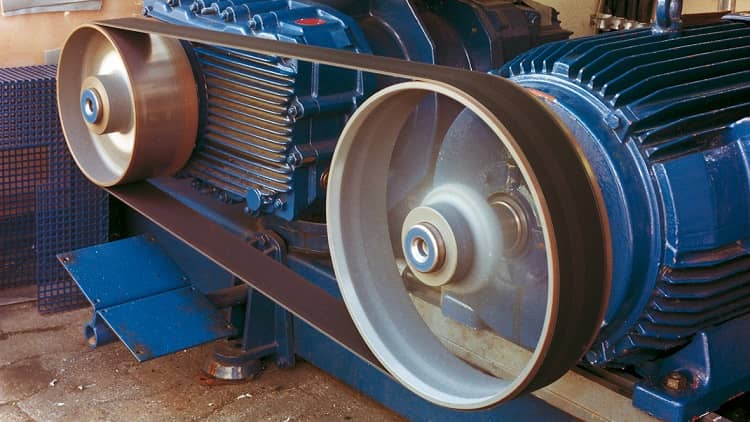
V-belt drives are essential components in many industrial machinery systems. They provide a reliable method for transmitting power from one component to another, such as from an electric motor to a machine. As industries evolve, the demand for efficient power transmission systems increases, making it crucial to understand the mechanics and advantages of V-belt drives.
Working Principles of V-Belt Drives
V-belt drives consist of a flexible belt that runs along pulleys. The design allows the belt to grip tightly against the pulley, enabling effective power transmission. Here’s how they function:
- Belt Design: V-belts have a trapezoidal cross-section, which fits snugly into the grooves of the pulleys. This design enhances friction and reduces slippage.
- Tensioning: Proper tension is critical for optimal performance. A correctly tensioned V-belt minimizes wear and maximizes efficiency, ensuring that the power is transmitted effectively without excessive energy loss.
- Pulley Arrangement: The arrangement of pulleys can vary. In some systems, multiple belts may be used to distribute the load and improve overall efficiency.
Benefits of V-Belt Drives
V-belt drives offer several advantages over flat belt drives, making them a preferred choice in various industrial applications. The following points highlight their key benefits:
- Higher Efficiency: V-belts can transmit more power due to their design, which allows for better grip on the pulleys. This efficiency is crucial in reducing operational costs.
- Compact Design: V-belt drives require less space than flat belt drives. They can be installed in tighter spaces, which is advantageous in machinery design.
- Reduced Maintenance: With fewer moving parts and a robust design, V-belt drives typically require less maintenance compared to flat belt systems. This reliability can lead to decreased downtime and lower maintenance costs.
- Versatility: V-belts can operate effectively over a range of speeds and loads, making them suitable for many applications, from small machinery to large industrial equipment.
Applications of V-Belt Drives
V-belt drives are widely used across various industries due to their efficiency and reliability. Common applications include:
- Manufacturing Equipment: V-belt drives are prevalent in conveyors, lathes, and milling machines, where they efficiently transfer power.
- Agricultural Machinery: Equipment such as tractors and harvesters utilize V-belt drives for efficient power transmission.
- HVAC Systems: In heating, ventilation, and air conditioning systems, V-belt drives help power fans and pumps.
- Automotive Industry: V-belts are used in vehicles to drive components like alternators and water pumps.
Comparison with Flat Belt Drives
While flat belt drives have been a traditional choice in power transmission, V-belt drives present several advantages that can significantly impact system performance.
- Efficiency: As previously mentioned, V-belts provide better grip and less slippage, leading to higher efficiency in power transmission compared to flat belts.
- Space Requirements: V-belt drives can achieve the same power transmission in a smaller footprint, allowing for more compact machinery designs.
- Durability: V-belts generally have a longer lifespan due to their construction and reduced wear, making them a more durable option in demanding environments.
Choosing V-Belt Manufacturers in India
When selecting V-belt manufacturers in India, it is essential to consider their reputation, product quality, and range of solutions. Reliable manufacturers provide not only V-belts but also support in understanding the specific requirements of power transmission systems.
For those interested in learning more about V-belt drive systems and exploring reliable industrial belt solutions, it is important to understand their design, functionality, and industrial applications.
The Future of V-Belt Drives in Industrial Applications
As industries continue to advance, the role of V-belt drives in machinery will likely evolve. Innovations in materials and design are expected to enhance their efficiency and applicability. Understanding the mechanics and advantages of V-belt drives will remain crucial for mechanical engineers, industrial maintenance professionals, and manufacturing companies aiming for optimal performance in their machinery systems.